
El Peso de mis Vecinas
- Investigation
- Song
- 2018
A project on voice, proximity, and the shared weight of lived experience within cross-border neighbourhood contexts
El Peso de Mis Vecinas is an artistic research project that engages with women whose lives are shaped by cross-border movement and informal labour, particularly in relation to practices of carrying goods across borders.
The project explores how these forms of labour—often invisible, precarious, and physically demanding—produce specific conditions of proximity, where relationships are formed through shared routes, risks, and experiences.
The notion of “weight” operates both literally and metaphorically: referring to the physical burden of transported goods, as well as the emotional, social, and political dimensions carried by those who perform this labour.
Through the project, these experiences are articulated not only through speech but through singing, allowing personal and collective narratives to emerge in embodied and rhythmic forms.
Developed through close engagement with these contexts, the project also reflects on the position of the artist, for whom hosting becomes a process of learning—shaped by existing forms of care, exchange, and mutual support.
The project builds on earlier research into the circulation and meaning of objects across borders, particularly Objects and Desires, which explores value and desire through objects moving between Spain and Morocco.
Process
The project unfolds through periods of cohabitation developed in relation to these cross-border dynamics.
Living alongside the participants, the artist enters existing networks of relation shaped by movement, labour, and survival. These shared conditions create a space of proximity in which experiences are exchanged not only through conversation, but through everyday coexistence.
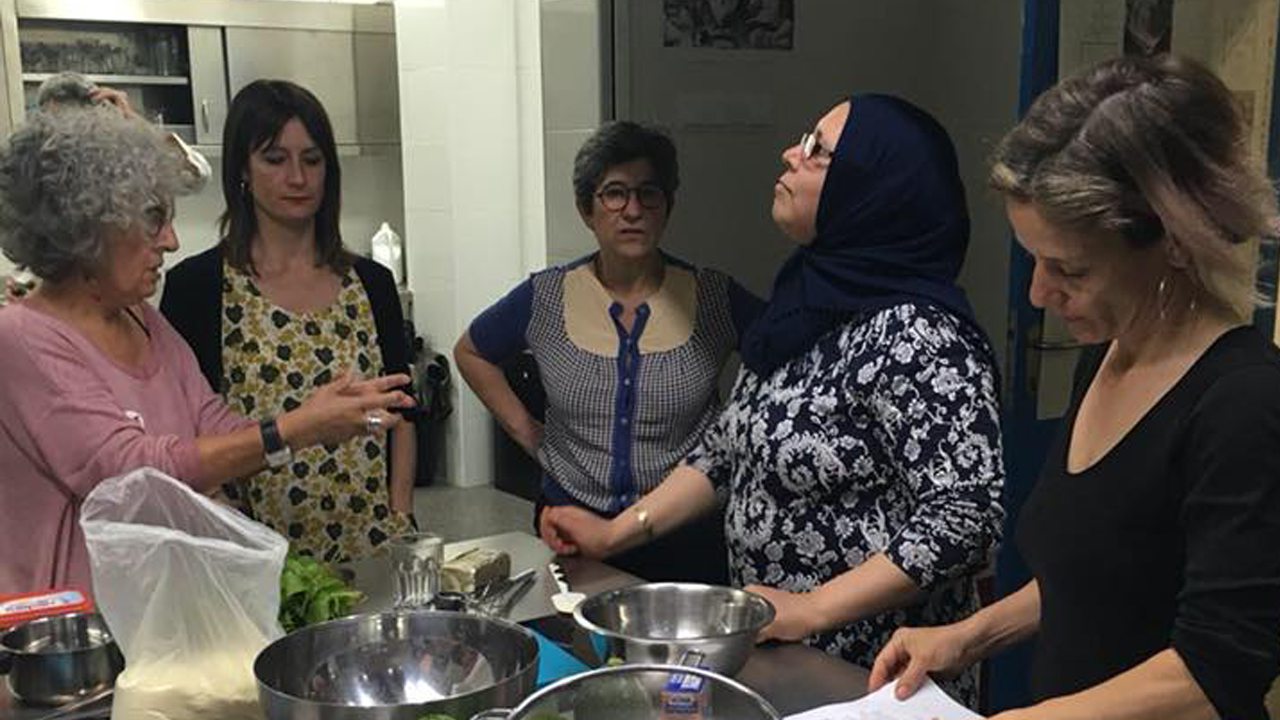
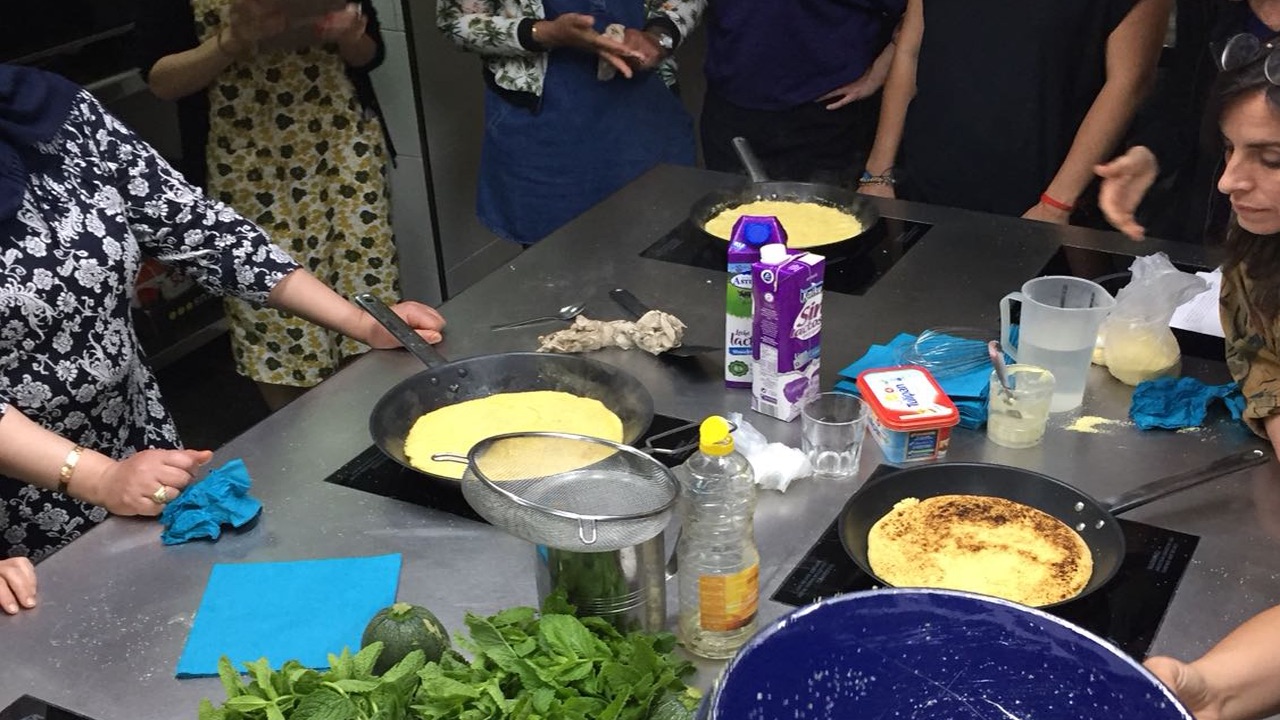
In parallel, cooking sessions developed in collaboration with Fundació Comtal created additional spaces of encounter with Moroccan women living in Barcelona, where practices of sharing, care, and daily exchange became part of the project’s methodology.
Through listening, conversation, and collective singing, participants articulate fragments of their lived experience. Singing becomes a central method, allowing experiences to be expressed through rhythm, repetition, and breath, beyond purely verbal language.
These voices are not stabilised into fixed accounts, but remain multiple, embodied, and in transformation.
In this context, hosting is not imposed but learned: it emerges through the negotiation of presence, trust, and proximity within already existing forms of exchange, support, and interdependence.
Form
The research is translated into performative, visual, and narrative forms:
A performance: Las voces de mis vecinas stages fragments of the collected voices through singing, performative narration, and vocal composition
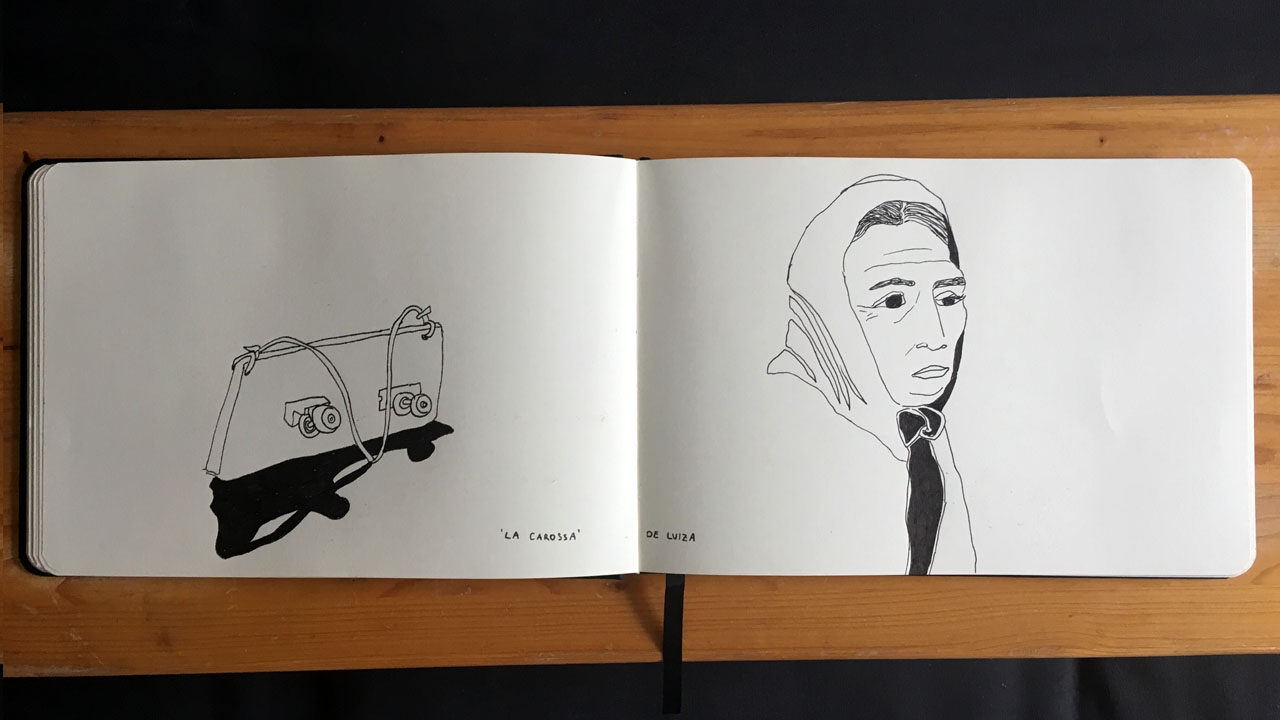
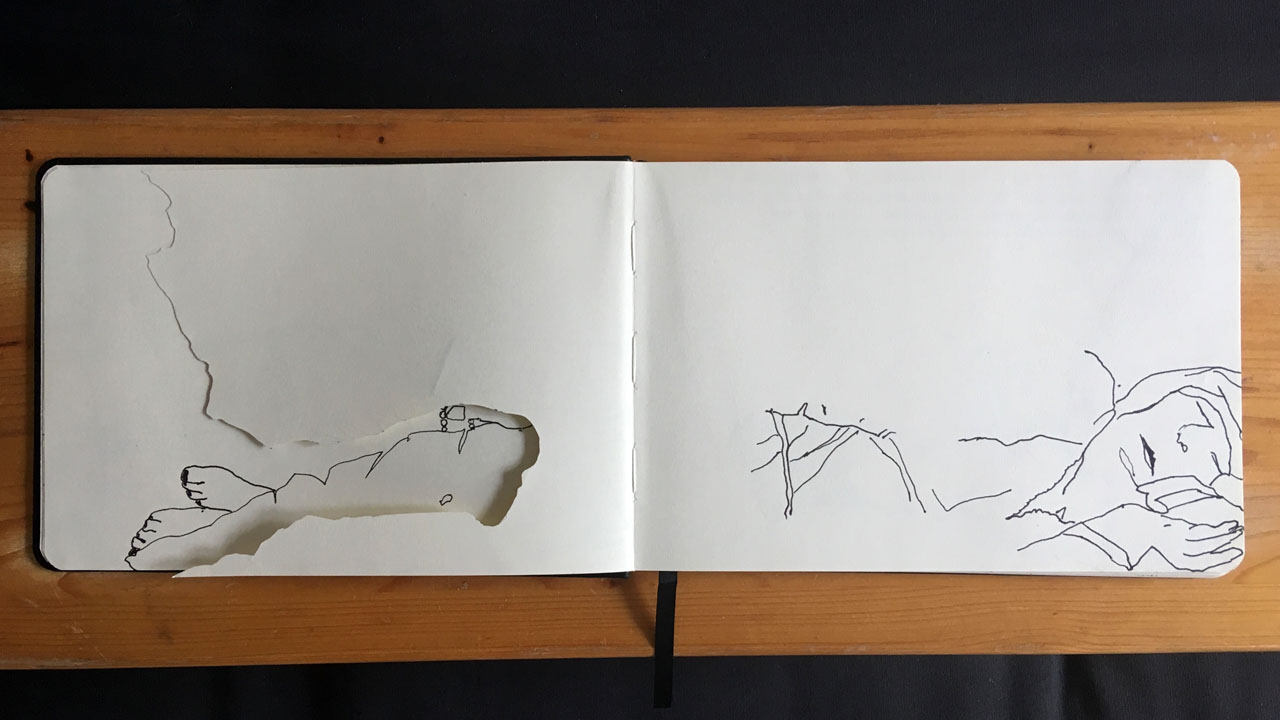
Drawings: series of 18 white-on-black ink drawings that translate the shared experiences into visual forms, condensing gestures, movements, and emotional states into symbolic compositions
Animation documentary (12 min): an unpublished short film structured as a musical composition, in which the songs and drawings developed during the research become the primary narrative material.
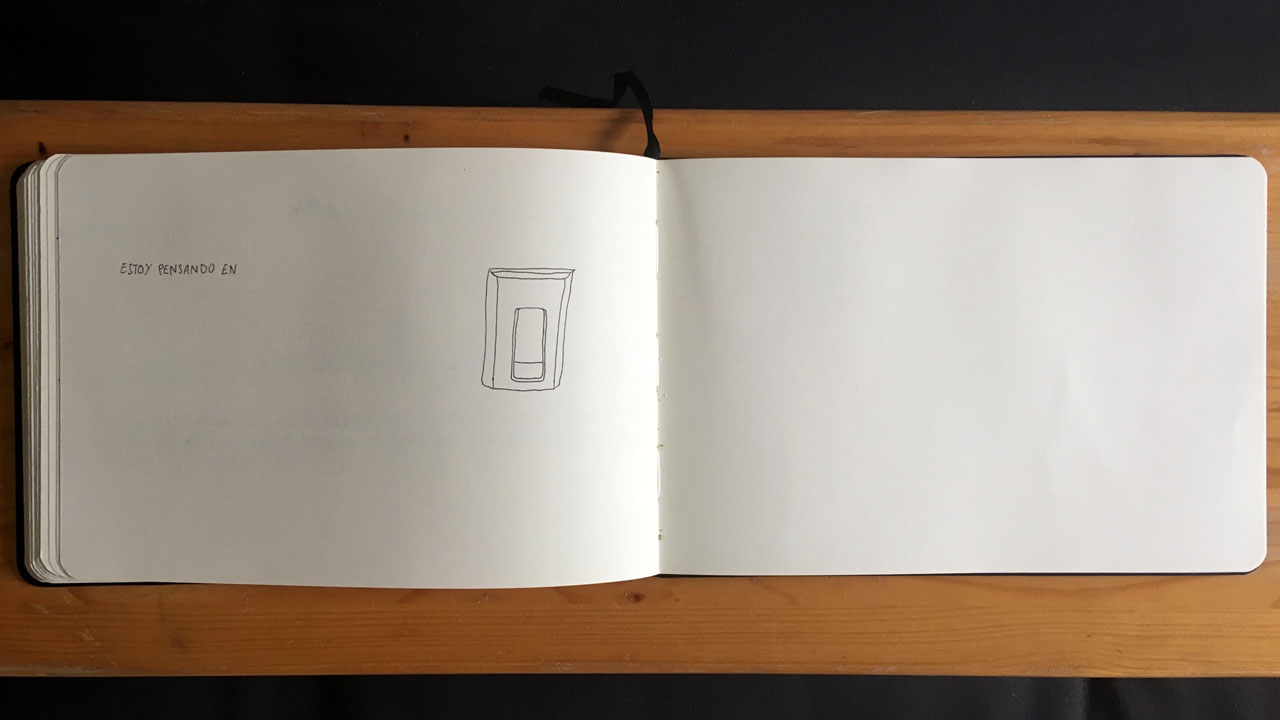
Notebook: a working and narrative space in which fragments of text, reflections, and observations are gathered, tracing the development of the project and its encounters
A publication: structured through the format of recipes, bringing together songs, writings, and narratives as scores for transmission. Developed through the encounters, it reconfigures lived experiences into instructional and poetic forms, articulating a multiplicity of voices and their resonance.
These forms do not document the encounters directly, but re-articulate them across different media: voice, image, and writing; allowing experiences to remain open, embodied, and in transformation.
Context
The project was developed in dialogue with women engaged in cross-border practices of carrying goods, forming neighbourhood relations that extend beyond fixed geographic boundaries.
It forms part of a broader inquiry into how voice constructs relational space, and how neighbourhood can be understood as a network of lived connections shaped by movement, labour, and shared conditions.
The work was presented in different contexts, including exhibitions and performances at Piramidón art center, MACBA, Festival Errant, the Museu de Sant Pol de Mar, and internationally at 365 Gallery in Viena.
The project received support from the Generalitat de Catalunya and the PEI Program MACBA.
Credits
Concept and direction: Christina Schultz
Developed in collaboration with: Nadia, Aisha, Fatima, Zhor, Sahra, Mileda, Hafeda, Regina, Stti
In collaboration with: Fundació Comtal
Support
The investigation of this project was made possible by the Barcelona Producció 2017/2018 grant and the PEI study program by MACBA.
The project was further supported by Pau Cata, as well as through residencies and collaborations with CeRRCa, Jiwar Creació i Societat, Le18 in Marrakech, the Institut Ramon Llull, and Nau Côclea.
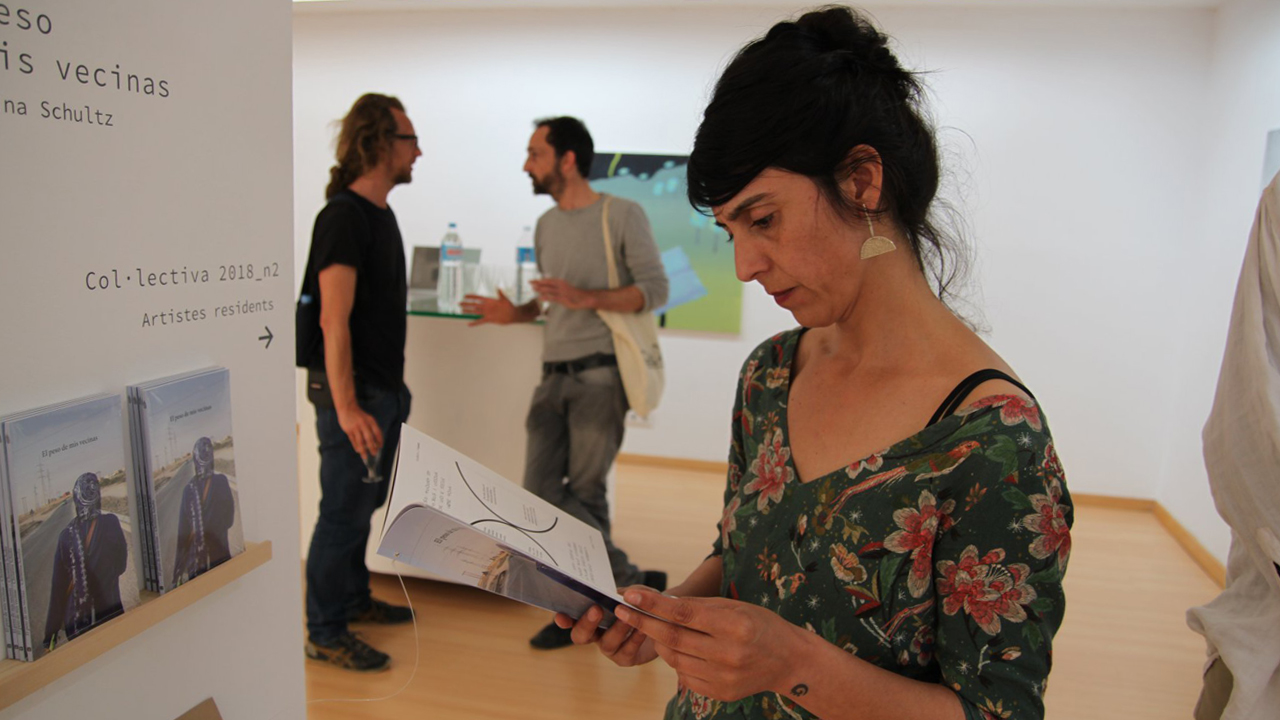
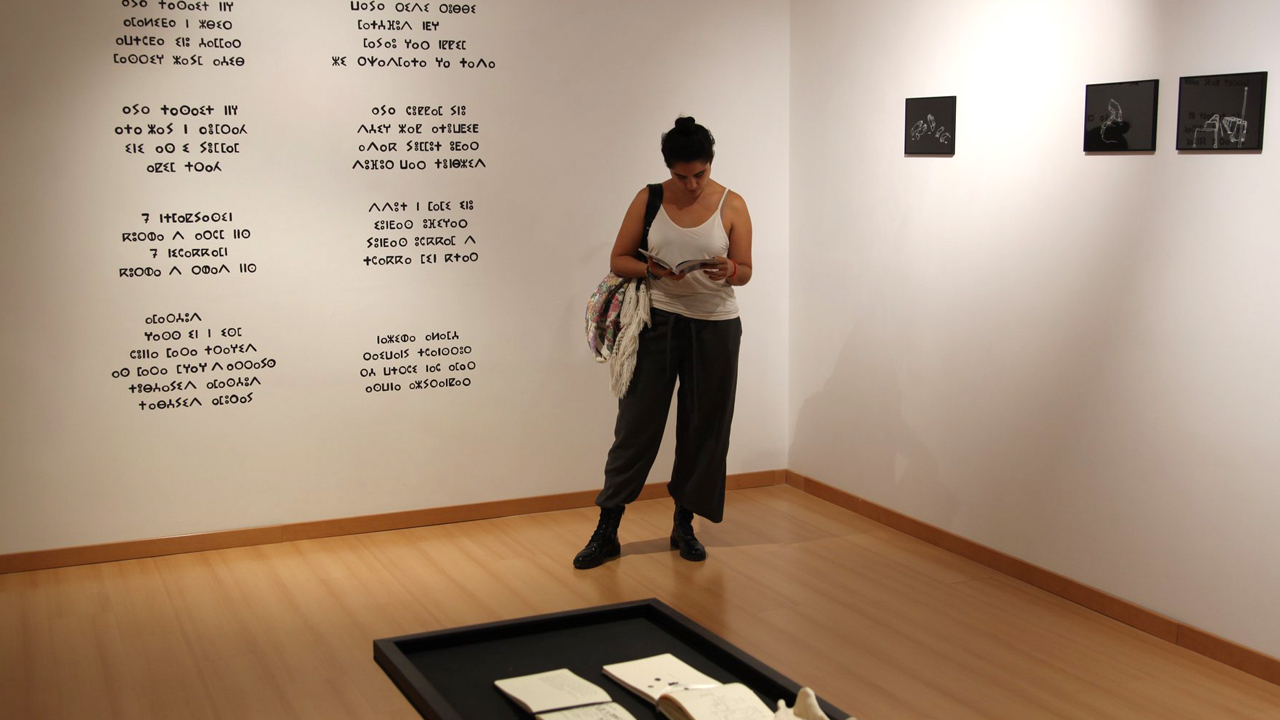

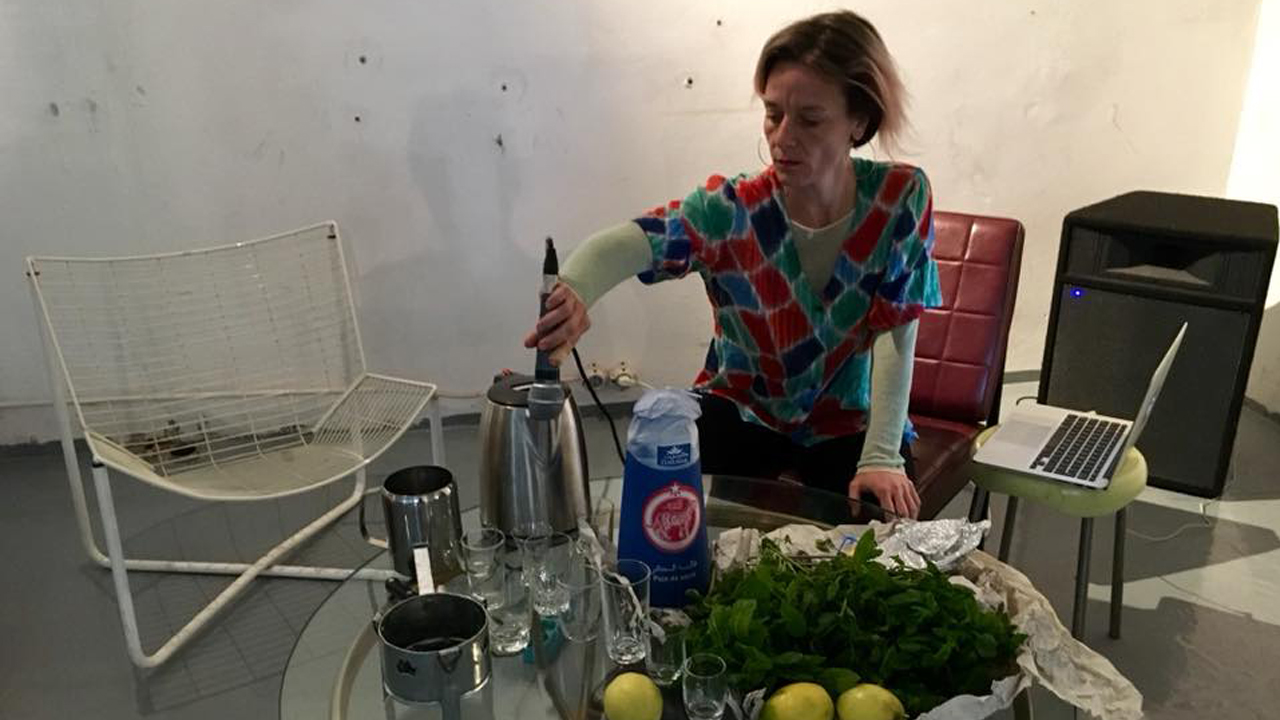
The presentation of the project in form of a cooking workshop at Fundación Comtal.
The performance at 365, curated by Dr. Lena Freimüller in Viena.
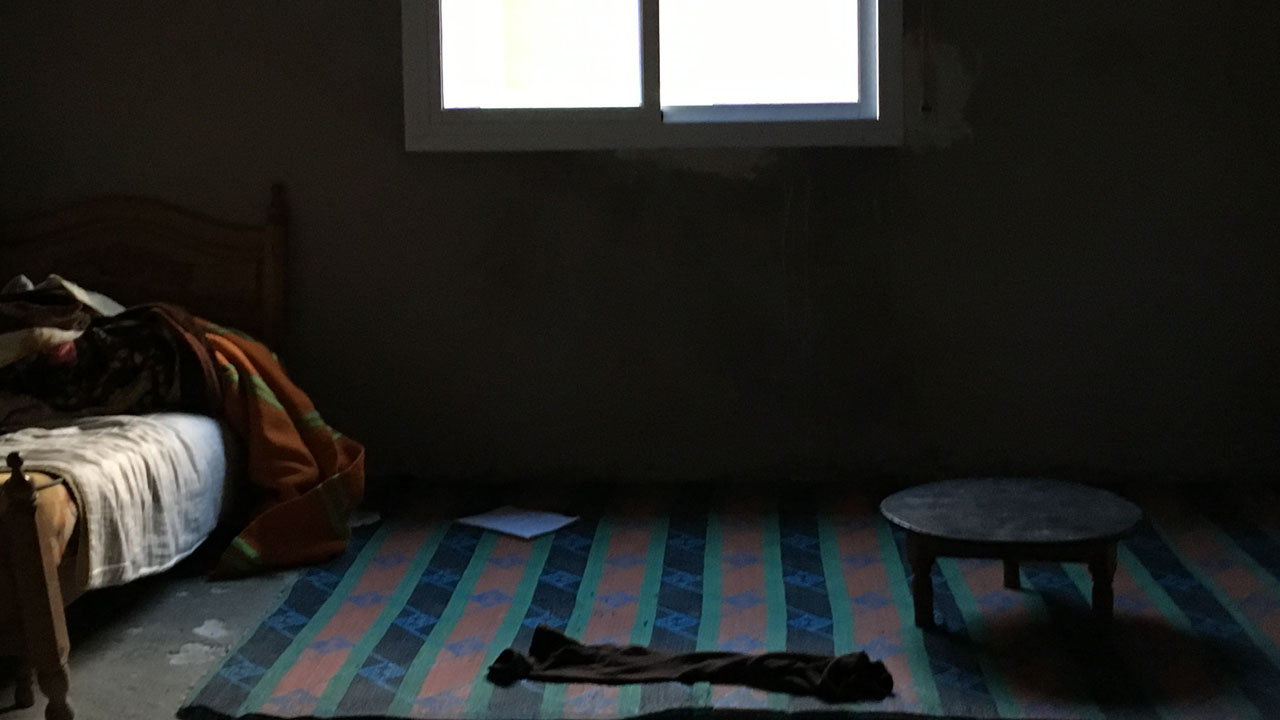
Portrait of Luiza
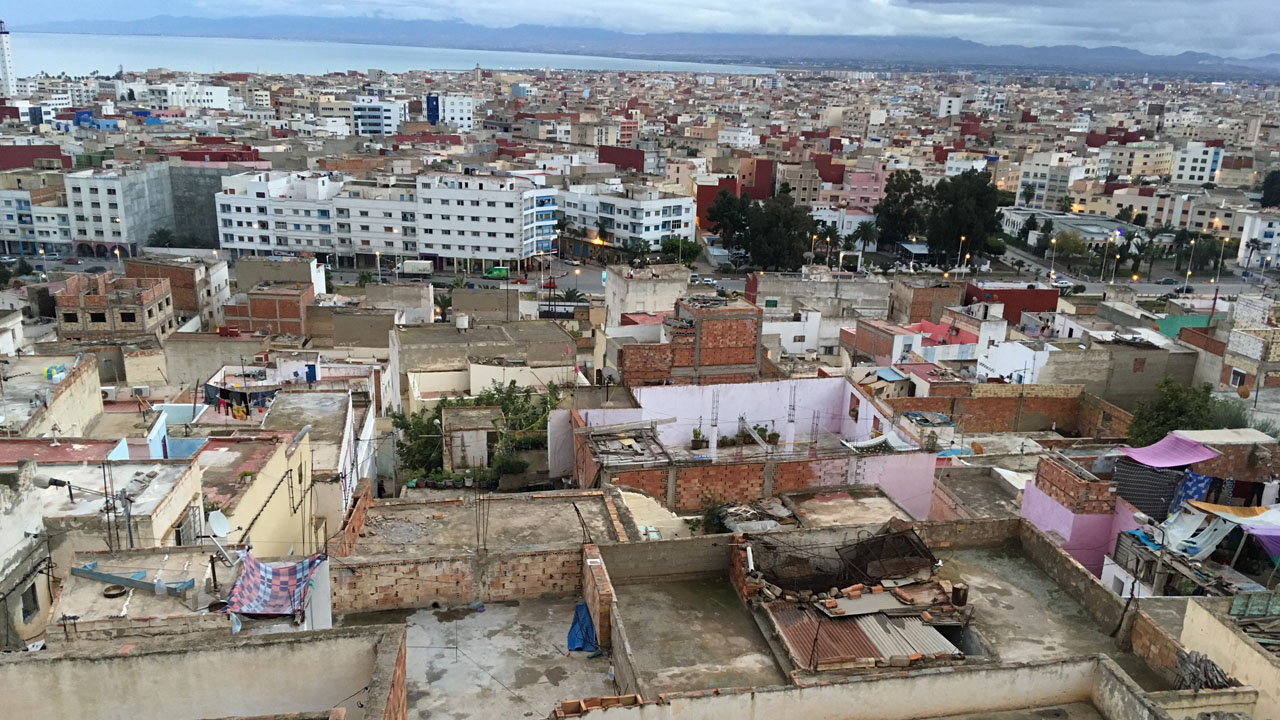
In October the border was closed on Friday, Saturday and Sunday for the atipical traffic. Since I left, it is only open two days a week. Nadias, Hafedas and Luizas despair is overcome by cooking, singing and talking about not much.
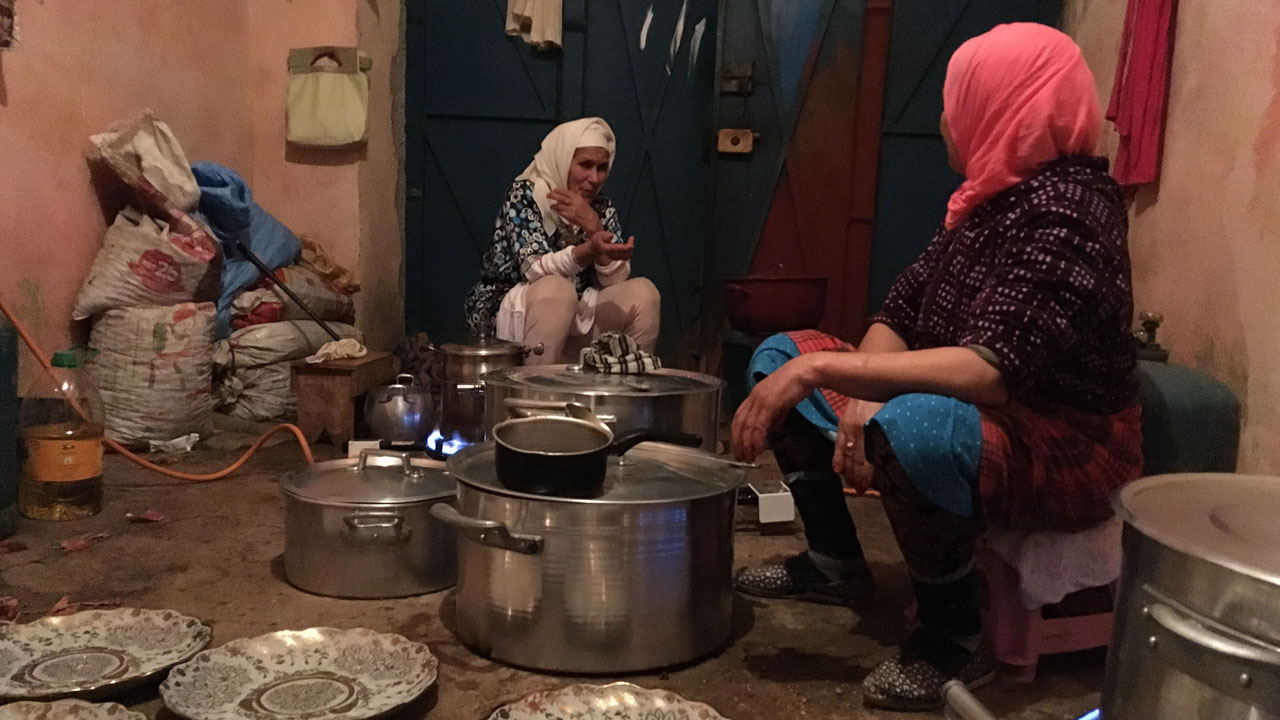
This is how a Moroccan wedding looks from the backside. The garage is the kitchen and the kitchen where men will eat as invisible as possible. Stti and Fatima are between 60 and 80, neither of them knows her exact age, and manage the 28 shared plates going out for the guests. Fatima is the groom’s grandmother and Stti the neighbor. It’s a all women run heavy work which needs a lot of collaboration from neighbor to neighbor.
Nadia, contrabandista, she doesn’t like the word ‘porteadora’, gets up at 2h30 in the morning to wait sometimes 5 hours in the cue at the Melilla border until the door opens. When she comes back for lunch with a big smile on her face for her three small children and also for me, she has already spent about 14 hours awake.
Drawing
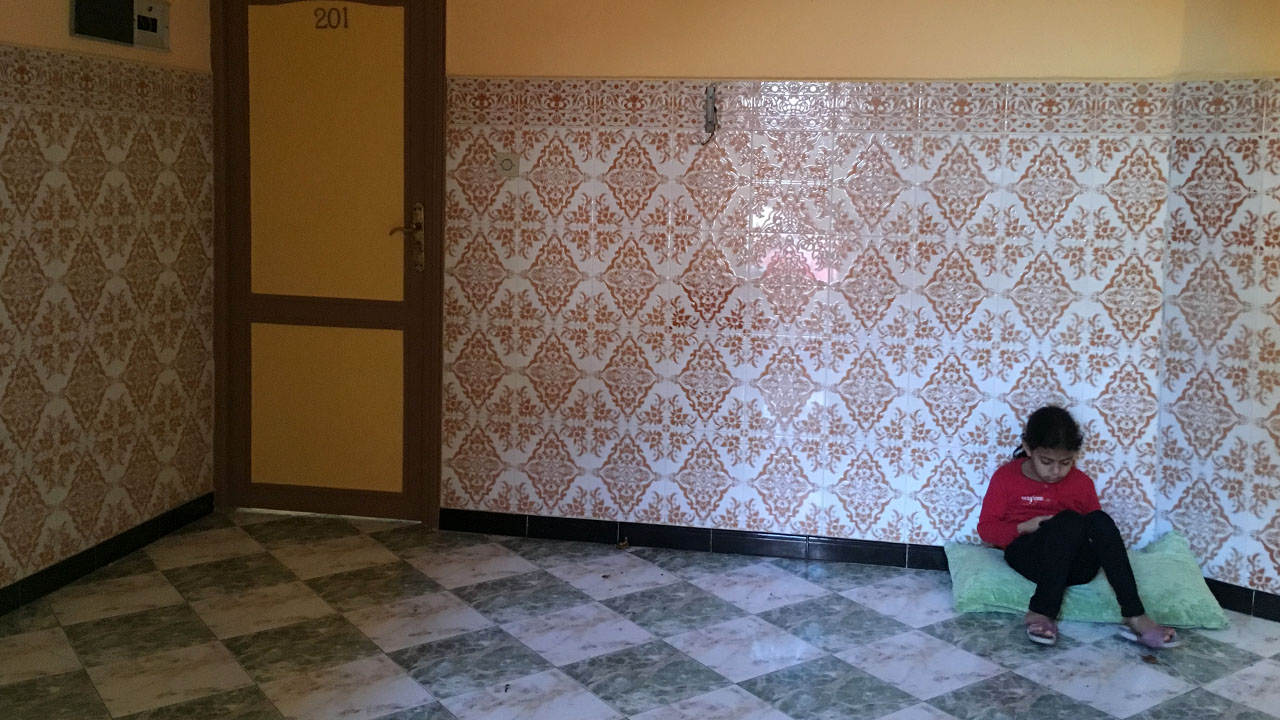
The day I waited outside of the door of the barrio chino for Nadia to come out, I spend one morning together with Syrian refugees who waited anxiously for the gate to open and maybe take a chance to blend in with all the people, who once orderly in a cue, stream out like overfloating water, rolling or carrying their huge **bultos ** as fast as possible. I wouldn’t imagine at that point that I would see them all again the last day I decided to spend in a hotel instead of staying at Luiza’s. Here is Samira having a break from her multiple brothers, sisters and cousins and their fathers waiting here in Nador to follow their mothers who managed to slip through the Moroccan guards mostly disguised as Porteadoras. Morocco won’t let them pass to seek help at the CETI, the governmental center for war refugees.
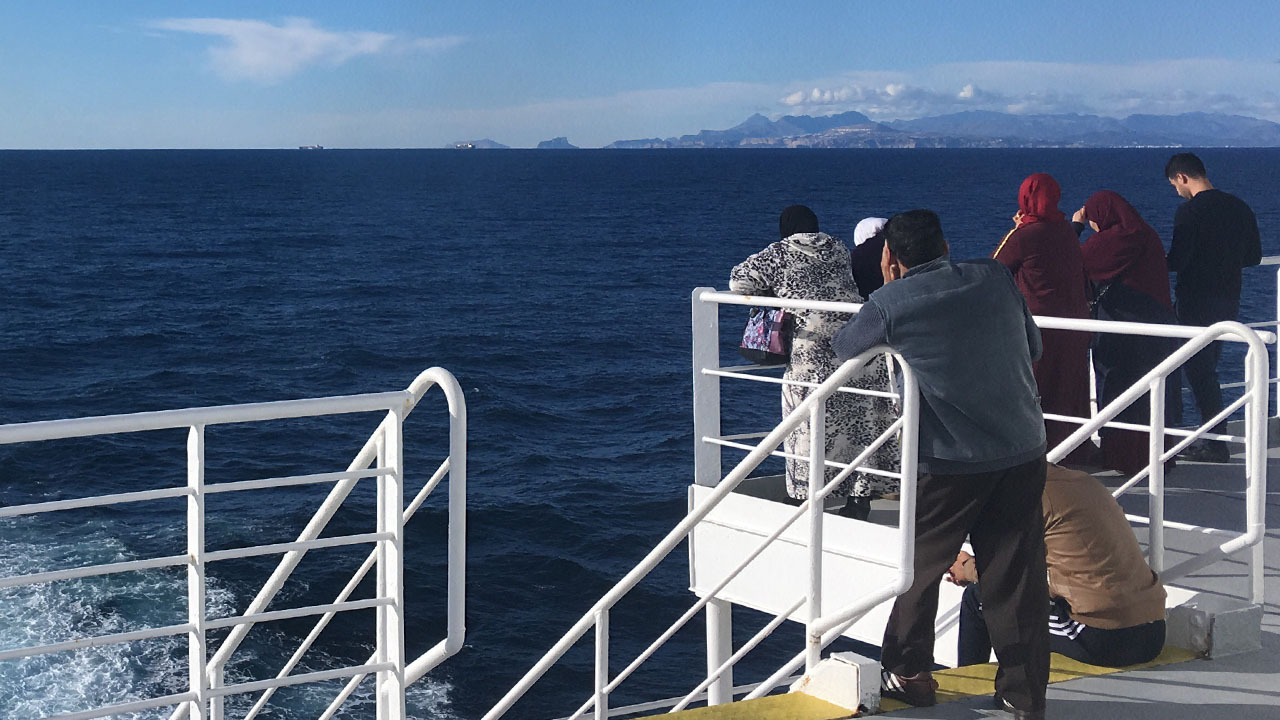
Both of the travels were made by boat, minimum 25 timeless hours floating slowly and solemnly through a worldly waters, whose only frontiers were different telephone companies. The visit ended with the same women sharing the cabin with me who during my stay in Nador also shared her life with me.
More works
Aixopluc
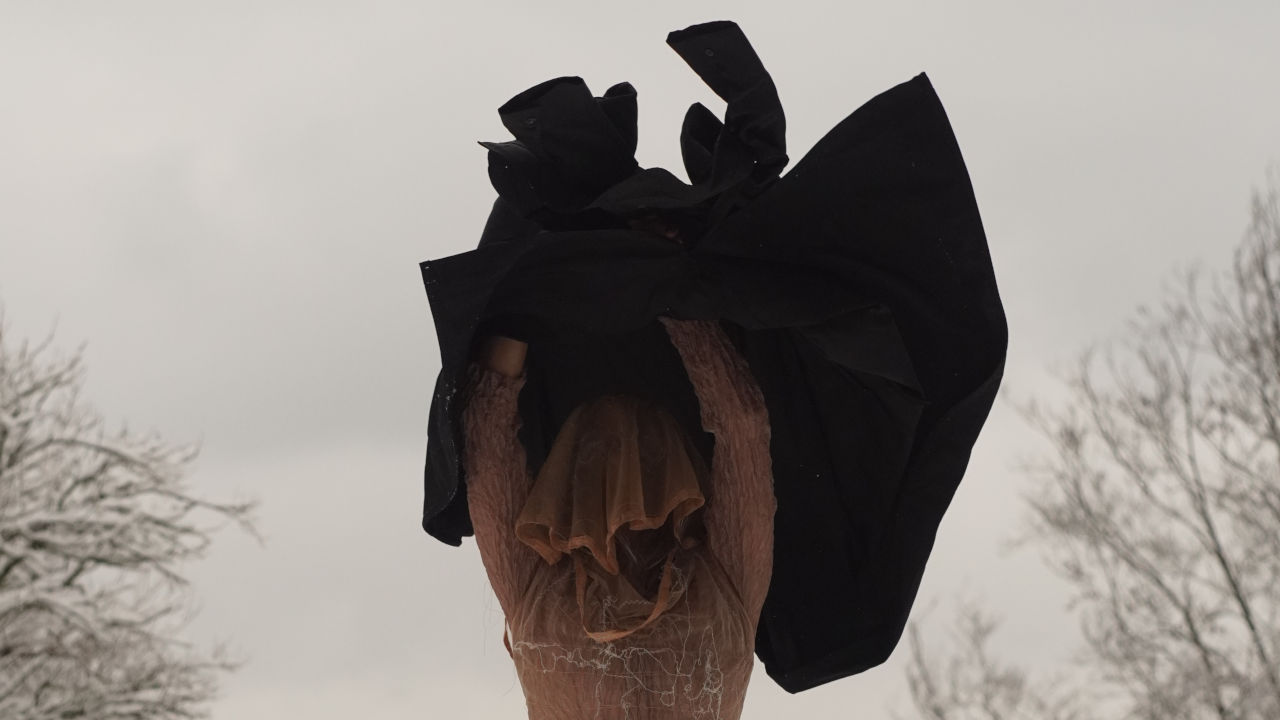
A performance about intimacy and safe spaces for women in prison within Walls of Breath, from inside out
Walls of Breath - from inside out
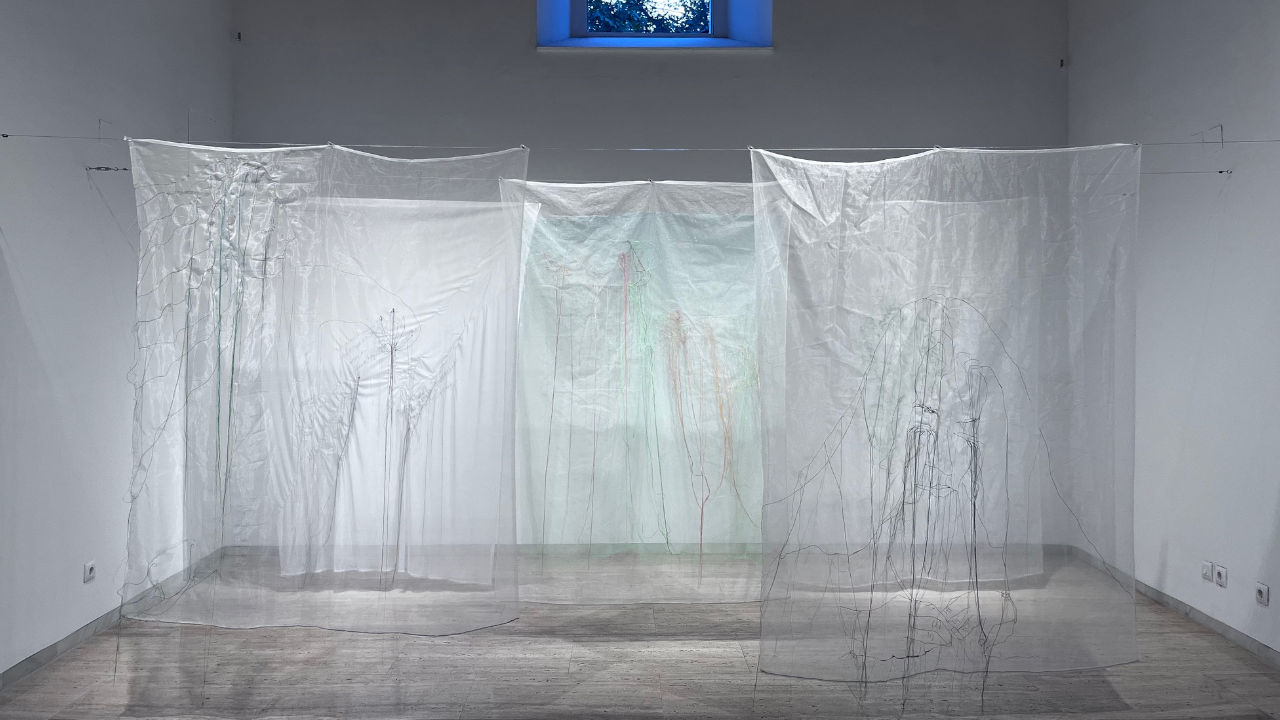
A translocal artistic research on intimacy, voice, and the construction of safe spaces within and beyond prison environments
Sheets of resistance
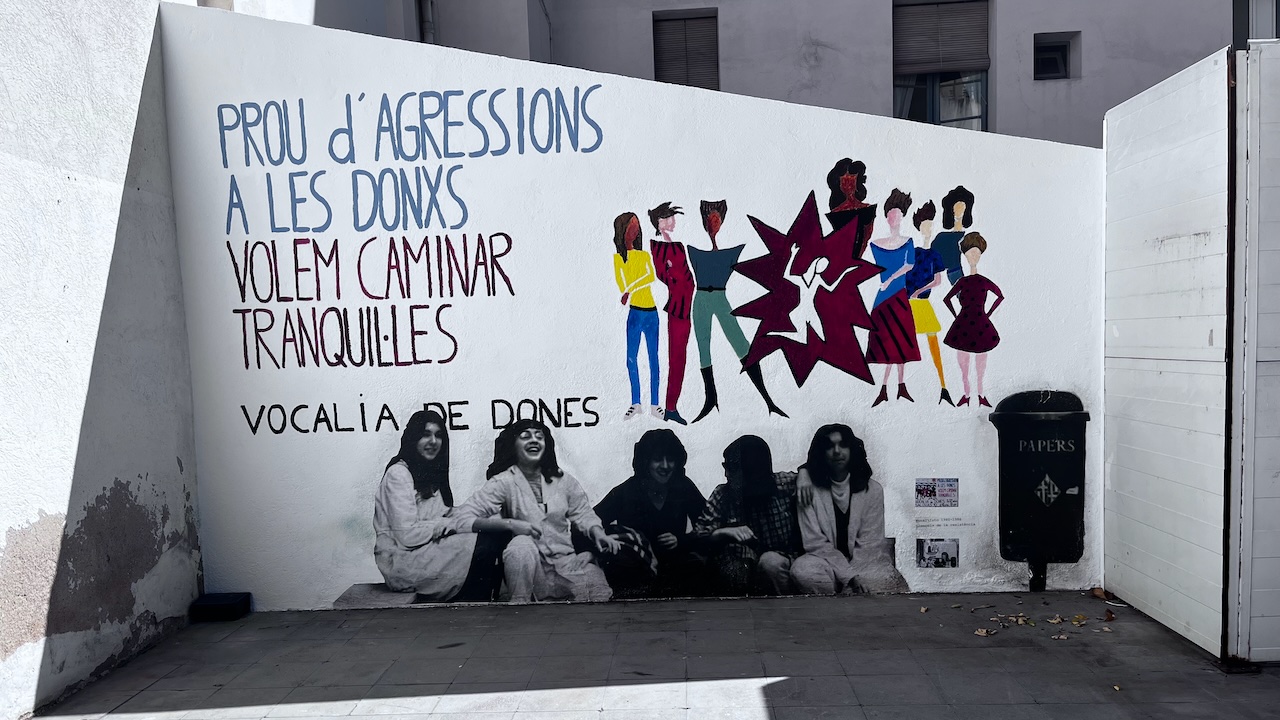
A project on memory, belonging, and resistance during the Spanish Transition in Gràcia, Barcelona

Utopian Almanack
A collective publication constructing speculative futures through situated knowledge and shared imagination.

Odyssey of objects
A project on movement, migration, and the circulation of objects as carriers of marginalised experience.

Rambla 14, wandering fragments
A performance within Fer Forats, emerging from its writing processes in relation to La Rambla and its inhabitants

Fer Forats
A transversal, collaborative writing project on La Rambla, Barcelona’s most emblematic yet increasingly gentrified public space.

Oráculos de los Márgenes
Performative and material works within Spells and Potions on rituals and circulation of mystic knowledge across marginalised practices

Anarcomistical Herstories
Performance within Spells and Potions, translating its hosted encounters into a performative and narrative form

Spells and Potions
A project on embodied knowledge, care, and alternative forms of mystic knowledge developed in collaboration with Metzineres.

El Peso de mis Vecinas
A project on voice, proximity, and the shared weight of lived experience within cross-border neighbourhood contexts
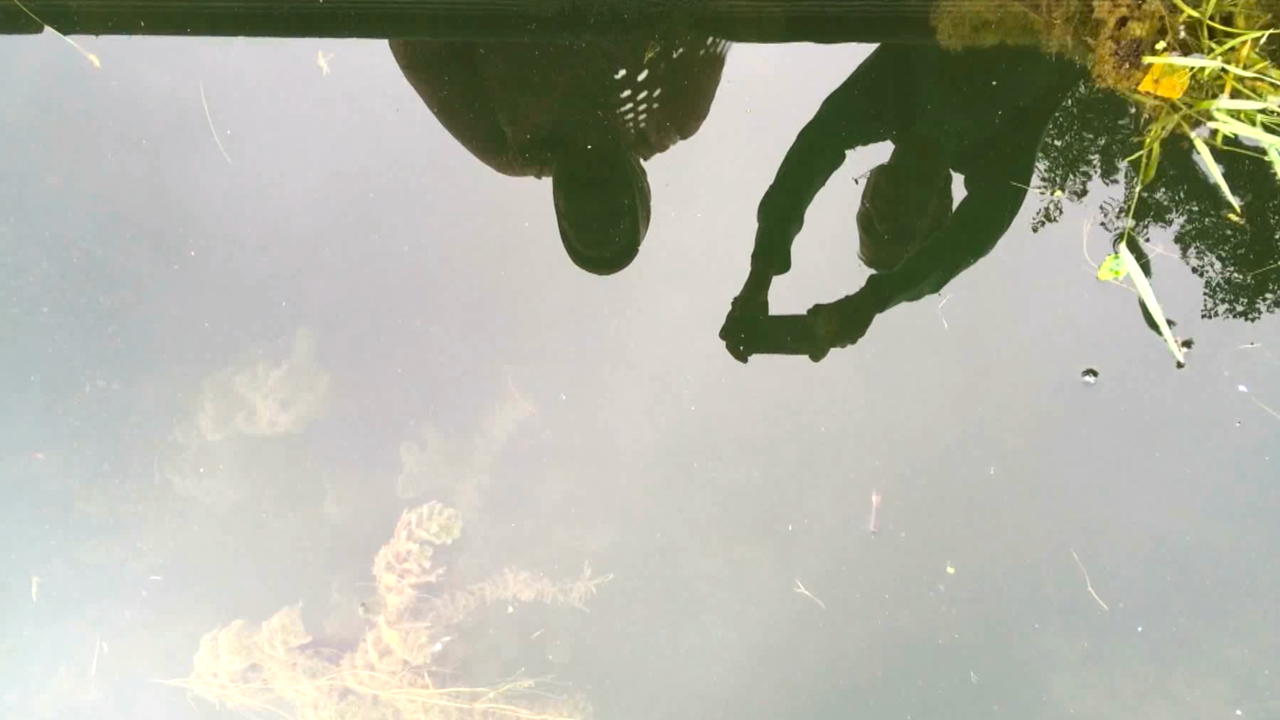
The Voices of my Neighbours
Performance and animated documentary within El Peso de Mis Vecinas, translating lived experience into vocal and performative form.

Objects and Desires
The project compares the meaning of objects imported from Spain and the ones bought by tourist in Marrakech.

Tomatl - the red gold
A project on food, value, and the political economies around the world embedded in everyday consumption.
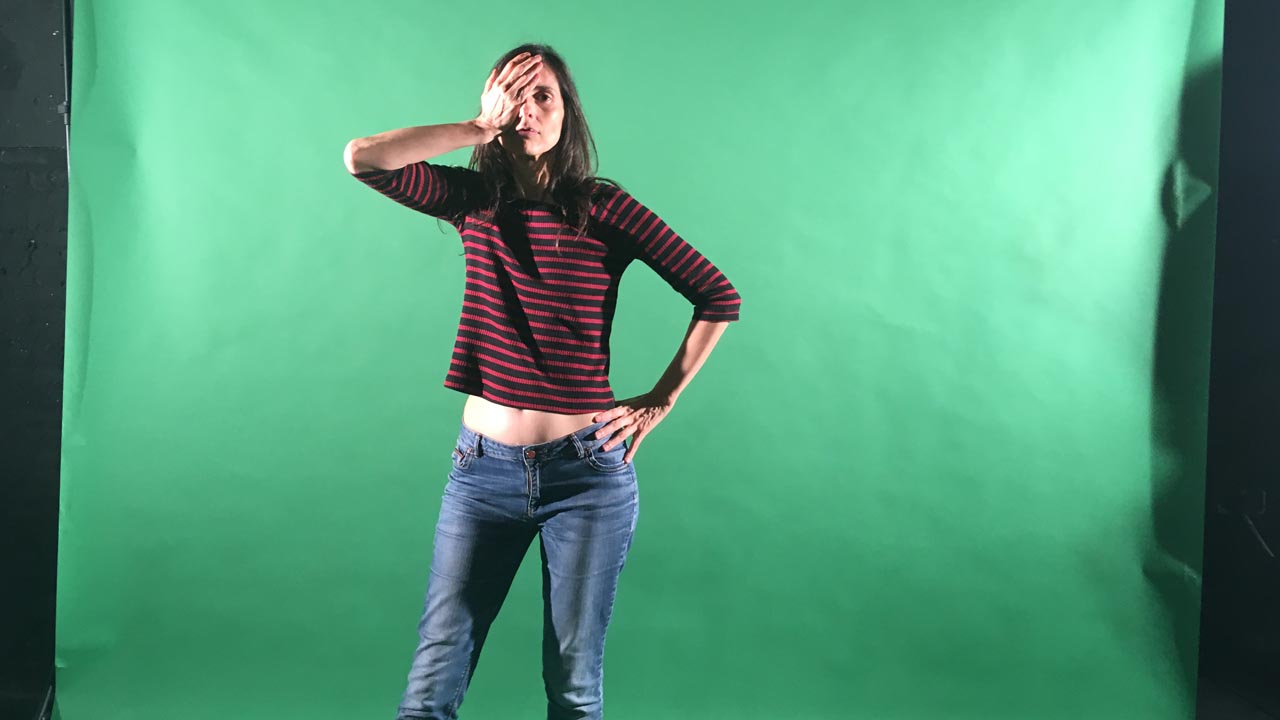
Piratas Profetas Parasitoides
A project on digital identity, value, and the translation of online life into performative and material forms.

Wasting time or how to levitate
Drawings, a mural and a performative reflection on the concept of wasting time and levitation as an answer.

Nothing Left But Deep Sleep
A local spanish landline number. An add under SERVICES at the local newspaper. These are the traces of 2 lullybies texted, performed and registered for public use.

Laboratory of Doing Nothing
The Laboratory of Doing Nothing is a longterm artistic investigation on our tired working society through collaborative thinktanks, interventions and instalations.

El Manifiesto Del No Hacer
A manifesto against work and the working society, declared in collaboration with Mar Merino.

I would prefer not to
This work is a telephone performance. A telephone ringing until someone picks it up. A fragmented narration on resistance, string theory and Bartleby the escrivener.

Decision with no Return or A Sense of Territory
A video and installation piece, an investigative detective story on the new relationship between England and Europe after Brexit.

Perra Perdida
A performative guided tour on loss, disappearance, language and the activation of forgotten histories of communication, sexuality, and public life.

The Do Nothing Way
Do nothing is a instalation of a reading performance in a hammock and a series of nine fotographic prints.

Oooops, I have a plan
A performative and audiovisual work exploring how pop music and cinema shape political fantasies and collective imagination

Washing Machine Spin Dry Lead Acid Battery Kill Flywheel
A performative investigation into memory, belief, and the unstable construction of collective truth.

EL FER i el no fer
A multidiciplinary puzzle of reflections on the phenomenon of time and a labor addicted society.

Do Nothing II
A daily non-action of doing nothing during 30 days. Made visible in a blogspace. The posts were generated simultaneously with Clara Garí.

“Say hi to Tom!”
A participatory collage project on tourism, exchange, and the circulation of personal narratives through the postal system.

YOU your WALL and ME
A participatory site-specific collage project exploring hosting, intimacy, and the transformation of domestic and shared space

Who is she?
A performance exploring autobiographical projection, identity, and emotional transformation through performative animation

Limbic Trilogy
A cycle of audiovisual performances exploring desire, emotional projection, and sensory excess through real-time image-making

OMA OMA OMA
An animated documentary on work, intimacy, gender, and memory through autobiographical narration and hybrid animation techniques
PornoLoops
A video installation exploring repetition, desire, and the circulation of sexual imagery through looping moving images

Heroes
An installation project exploring self-construction through fictional heroes and emotional landscapes

Short fictions of Survival
A cycle of autobiographical stop-motion films exploring vulnerability, transformation, and emotional survival through handmade animation.